
Assessment of Knowledge and Practice of Self-Medication in a Nigerian University: Implication for Policy Action in Curbing the Increasing Practices of Self-Medication among Nigerian Undergraduates
Keywords:
Policy Action, Nigerian University, Self-medication, Practice, KnowledgeAbstract
Background: Self-medication is taking drugs without a medical doctor's prescription. The practice occurs worldwide but differs from place-to-place and person-to-person with their resultant consequences like drug overdose, development of resistance, inadequate dosing, tolerance, and addiction.
Objectives: This study assessed the knowledge and practice of self-medication among undergraduates of a public university in South-South, Nigeria.
Methods: A descriptive cross-sectional study was carried out among 333 respondents using a multi-stage sampling technique. An interviewer-administered questionnaire was used for data collection. The questions covered knowledge, practice, reasons, and sources of information for selfmedication. Chi-square test was used to test for the association; the level of signicance was set as P <
0.05.
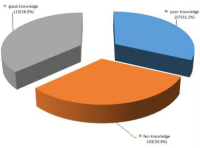
Results: The mean age (SD) of respondents was 21.59 +3.34years. There was a slight male preponderance (52.8%). Over one-third of respondents (36.7%) had good knowledge, while 63.3% had fair to poor knowledge of self-medication. Amongst those who practice self-medication, 25.3% had a high rate of use; 29.3% had a moderate rate while 17% have a low rate. The most common
reasons for self-medication were the consideration of illness as being minor (71%) and low cost of drugs/ease of purchase (36.5%). Relatives, friends, and family (52.5%) were the highest source of information, while the highest source of the drug was patent medicine dealers (74.4%). There was a statistical signicant relationship between the knowledge of respondents and the practice of selfmedication with a P-value of <0.001.
Conclusion: A large proportion of the undergraduate students of the University practice selfmedication. Their knowledge of self-medication was signicantly associated with the level of practice.
Downloads
References
1. Afolabi AO. Factors inuencing the pattern of self-medication in an adult Nigerian population. Ann African Med. 2008;7(3):120-7.
2. World Health Organization. The role of the pharmacist in self-care and self-medication. 1998.
3. Esan DT, Fasoro AA, Odesanya OE, Esan TO, Ojo EF, Faeji CO. Assessment of Self-Medication Practices and Its Associated Factors among
Undergraduates of a Private University in Nigeria. J Environ Public Health. 2018;2018. Available at:https://www.ncbi.nlm.nih.gov/pmc/articles/PMC6317103/ Accessed July 2019
4. Arikpo G, Eja M, Enyi-Idoh K. Selfmedication in Rural Africa: The Nigerian Experience. Internet J Heal. 2009;11(1). Available at: https://print.ispub.com/api/0/ispub-article/5032 Accessed on 30th June 2019.
5. Arute JE, Adje UD, Akonoghrere R, Omuta MC. Self-medication practices in the Odo-Ado community of Ado-Ekiti, Ekiti State. Int Res J Pharm Pharmacol. 2013;3(4):53-7.
6. Osemene KP, Lamikanra A. A study of the prevalence of self-medication practice among university students in Southwestern
Nigeria. Trop J Pharm Res. 2012;11(4):683-9.
7. Al-Hussaini M, Mustafa S, Ali S. Self-medication among undergraduate medical students in Kuwait with reference to the role of the pharmacist. J Res Pharm Pract. 2014;3(1):23-30.
8. Fadara JO, Tamuno I. Antibiotic Self-medication university medical undergraduates in Northern Nigeria. J Pub Heal Epidemiol. 2011;3(5):217-220.
9. IBM Corp. released in 2012. IBM SPSS Statistics for Windows, Version 21.0. Armonk, NY: IBM Corp.
10. Kayalvlizhil S, Senapathi R. Evaluation of perception, attitude, and knowledge about selfmedication among business students in 3 selected cities. South India Int J Enterp Innov Manag Stud. 2001;1:40-4.
11. Suleiman IS, Osama HMI, Laila M, Riham W. Evaluation of selfmedication among pharmacy students. Am J Pharmacol Toxicol. 2012;7(4):135-40.
12. Gupta P, Bobhate PS, Shrivastava SR. Determinants of selfmedication practices in an urban slum community. Asian J Pharm Clin Res. 2011;4(3):54-7.
13. Yusuff KB, Omarusehe LD. Determinants of selfmedication practices among pregnant women in Ibadan, Nigeria. Int J Clin Pharm.
2011;33(5):868-75.
14. Corrêa daSilva MG, Flores SMC, Muccillo-Baisch AL. Selfmedication in university students. BMC Public Heal. 2012;12:339-49.
15. Banerjee I, Bhadury T. Self-medication practice among undergraduate medical students in a tertiary care medical college, West
Bengal. J Postgrad Med. 2012;58(2):127.
16. Fadara JO, Tamuno I. Antibiotic Selfmedication among university medical undergraduates in Northern Nigeria. J Pub Heal Epidemiol. 2011;3(5):217-220.
17. Sapkota AR, Coker ME, Goldstein RER, Atkinson NL. Self-medication with antibiotics for the treatment of menstrual symptoms in southwest Nigeria: A cross-sectional study. BMC Public Heal. 2010;10:610.
8. Sarahroodi S, Arzi A, Sawalha AF, Ashtarinezhad A. Antibiotics self-medication among southern Iranian university students. Int J Pharmacol. 2010;6:48-52.
19. Koushede V, Hansen EH, Andersen A, Holstein BE. Young adults' medicine use for headache: the combined effect of socioeconomic position and perceived stress, and the contribution of sense of coherence. Res Soc Adm Pharm., 2012;8(6):533-41.
20. Sabo SY, Wannang NN. Assessment of treatment pattern and presentation of uncomplicated malaria at the General OutPatient Department Of Abubakar Tafawa Balewa University Teaching Hospital (ATBUTH), Bauchi, Nigeria. World J Pharm Res. 2013;3(1):1508-18.
21. Auta A, Banwat SB, Dayom DW, Shalkur D, Avu MO. Occurrence and Treatment of Common Health Problems in a Nigerian Community. Journal of Young Pharmacists, 2012; 4(1): 49.
Downloads
Published
Issue
Section
License
All articles published in the journal are licensed under a Creative Commons Attribution (CC BY) license(i.e CC Attribution-NonCommercial-ShareAlike 4.0), allowing others to share, distribute, and build upon the work, provided the original author(s) and source are properly cited. Authors retain the copyright of their work.

