
Factors affecting Career Preferences for Nephrology among Medical Interns in South-South Nigeria
Keywords:
specialty, nephrology, medical interns, hospital, deterrents, careerAbstract
Background: Despite the increasing magnitude of kidney disease, there appears to be a dearth of Nephrologists globally. This is more disturbing in low income countries like Nigeria where health care is already staggered by several factors. The aim of the study was to determine the career preferences for nephrology among medical interns as this may be an indicator of the future nephrology workforce
Methods: This cross-sectional descriptive study was carried out among interns in four tertiary hospitalspurposively selected in south-south Nigeria between January and March, 2021. A self- administered questionnaire was used to obtain their biodata, information on factors influencing specialty choice, deterrents to choice of nephrology and their recommendation.
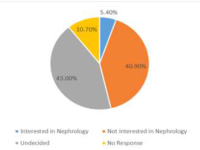
Results: Only 8(5.4%) respondents were interested in specializing in nephrology. The most important factors determining choice were post-fellowship job opportunities (57.6%), opportunities to perform procedures (51.5%) and prospect of a future private practice (37.9%). The most important factors cited as deterrents to choosing Nephrology included high risk of death (41.2%), poor outcome of patients (36.6%) and severity of illness (31.7%) Recommendation made by respondents included provision of standard equipment
and working tools (82.1%), improved quality of service (80.6%) and provision of health insurance for patients (77.8%).
Conclusion: Career preference for nephrology was low and deterred by high risk of death and poor outcome of renal patients. Specialty choice was mainly influenced by job opportunities, opportunities to perform procedures and prospect of future private practice.
Downloads
References
1. Sharif MU, Elsayed ME, Stack AG. The global nephrology workforce: emerging threats and potential solutions! Clin Kidney J. 2016; 9(1):11-
22.
2. Primary Health Care Systems (PRIMASYS): Case study from Nigeria. Geneva: World Health Organization 2017. License: CC BY-NC-SA 3.0 IGO.
3. El Matri A: End-stage renal disease in Africa; in AFRAN (ed): African Association of Nephrology (AFRAN), Khartoum 2007.
4. Naicker S. End-stage renal disease in sub- Saharan Africa. Kidney Int Suppl 2013; 3: 161–163.
5. HSE Workforce Planning, Analysis, & Informatics Unit, Dec 2013
6. Nephrology Association of Nigeria. 30th annual scientific conference and general meeting, Ilorin, Kwara State, 2018. Available at https://www.dailytrust.com.ng/3-in-10- Nigerian-adults-have-kidney-disease-saysnephrologists.html. Accessed Feb 13, 2021.
7. Hamer RA, El Nahas AM. The burden of chronic kidney disease is rising rapidly worldwide. Br Med J 2006; 332: 563–564
8. Understanding the Nephrologist Shortage. Renal Business Today, 2009. http://www.renalbusiness.com/articles/2009/09/understanding-the-nephrologist-shortage.aspx?pg=2#content. Last accessed 15 Feb 2021.
9. Monson JP. The changing face of renal medicine in the UK. Clin Med 2007; 7: 103–104
10. Berns JS, Ellison DH, Linas SL, Rosner MH. Training the next generation's nephrology workforce. Clin J Am Soc Nephrol 2014; 9: 1639–1644.
11. Eze BI, Okoye OI, Maduka-Okafor FC, Aguwa EN. Factors influencing choice of medical specialty of pre-residency medical graduates in
southeastern Nigeria. J Grad Med Educ 2011l; 3:367-71.
12. Oyebisi OO, Adeyera O, Alebiosu CO. Factors associated with choosing nephrology as a sub-specialty by internal medicine residents in
Nigeria. Res J Health Sci 2019; 7(4):265-271.
3. Nair D, Pivert KA, Baudy A 4th , Thakar CV. Perceptions of nephrology among medical students and internal medicine residents: A national survey among institutions with nephrology exposure. BMC Nephrol. 2019; 20(1):1–11.
14. Shah HH, Jhaveri KD, Sparks MA, Mattana J. Career choice selection and satisfaction among US adult nephrology fellows. Clin J Am Soc
Nephrol. 2012; 7:1513–20. 8.
15. Jhaveri KD, Sparks MA, Shah SS, Khan S, Chawla A, Desai T et al. Why not nephrology? A survey of US internal medicine subspecialty fellows. Am J Kidney Dis. 2013; 61(4):540–6.
16. Barat A, Goldacre MJ, Lambert TW. Career choices for nephrology and factors influencing them: surveys of UK medical graduates. JRSM Open. 2018; 9(8): 2054270418793024.
17. Ogaboh AA, Udom HT, Eke IT. Why brain drain in the Nigerian health sector. Asian J Applied Sci. 2020; 8(2):95-104.
18. Karangizi AH, Chanouzas D, Mahdi A, Foggensteiner L. How can we make renal medicine careers more appealing to UK trainees? Clin Kidney J 2019; 12(5):756-9.
19. Daniels MN, Maynard S, Porter I, Kincaid H, Jain D, Aslam N. Career interest and perceptions of nephrology: A repeated cross-sectional survey of internal medicine residents. PLoS One. 2017; 12(2):e0172167.
20. Osman MA, Alrukhaimi M, Ashuntantang GE, Bellorin-Font E, Gharbi MB, Braam B et al. Global nephrology workforce: gaps and opportunities toward a sustainable kidney care system. Kidney Int Suppl (2011) 2018; 8(2):52-63
21. Chang PY, Hung CY, Wang KI, Huang YH, Chang KJ. Factors influencing medical students' choice of specialty. J Formos Med Assoc. 2006; 105(6):489-96.
22. Ko HH, Lee TK, Leung Y, Fleming B, Vikis E, Yoshida EM. Factors influencing career choices made by medical students, residents, and practising physicians. B C Med Journal 2007;49(9):482-429
23. Beckwith H, Kingsbury M, Horsburgh J. Why do people choose nephrology? Identifying positive motivators to aid recruitment and retention. Clin Kidney J 2018; 11(5):599-604.
24. Lane CA, Healy C, Ho MT, Pearson SA,Brown MA. How to attract a nephrology trainee: quantitative questionnaire results. Nephrology
2008; 13(2):116-23.
25. Bhatnagar V, Diaz S, Bucur PA. The Need for More Mentorship in Medical School. Cureus 2020; 12(5):e7984. doi:10.7759/cureus.7984.
26. McMahon GM, Thomas L, Tucker JK, Lin J. Factors in career choice among US nephrologists. CJASN 2012; 7(11):1786-92.
27. Alasia DD, Emem-Chioma P, Wokoma FS. A single-center 7-year experience with end-stage renal disease care in Nigeria—a surrogate for the poor state of ESRD care in Nigeria and other sub-Saharan African countries: advocacy for a global fund for ESRD care program in sub-Saharan African countries. Int J Nephrol 2012; 2012:639653
28. Abene EE, Gimba ZM, Bello RN, Maga AI, Agaba EI. Practice of hemodialysis in a resource-poor setting in Nigeria: A 2-year experience. Niger Med J 2017; 58(5):156-159.
29. Ulasi II, Ijoma CK. The enormity of chronic kidney disease in Nigeria: the situation in a teaching hospital in South-East Nigeria. J Trop Med 2010; 2010:501957.
30. Adejumo OA, Akinbodewa AA, Okaka EI, Alli OE, Ibukun IF. Chronic kidney disease in Nigeria: Late presentation is still the norm. Niger Med J 2016; 57(3):185-189.
31. Nakhoul GN, Mehdi A, Taliercio JJ,Brateanu A, Diwakar A, Daou R et al. Residents' perception of the nephrology specialty. Kidney Int Rep
2020; 5(1):94-99.32. Jhaveri KD, Sparks MA, Shah HH. Novel educational approaches to enhance learning and interest in nephrology. Adv Chronic Kidney Dis. 2013; 20(4):336-46.
Downloads
Published
Issue
Section
License
All articles published in the journal are licensed under a Creative Commons Attribution (CC BY) license(i.e CC Attribution-NonCommercial-ShareAlike 4.0), allowing others to share, distribute, and build upon the work, provided the original author(s) and source are properly cited. Authors retain the copyright of their work.

